
Nightjar: medical intelligence platform
From casualty signal to evidenced decision
One connected platform brings together point-of-care records, a shared real-time medical picture, governed research and continuous monitoring. Each user sees the view they need, while every organisation retains control of its data.
- Data-source agnostic
- One shared platform
- Custody-preserving collaboration
- Resilient in low-connectivity environments
One platform, a different view for every role.
Nightjar connects clinical records, existing systems and wearable data through one governed medical intelligence layer. Information is captured once, structured once and presented through the view each user needs.
Connected inputs
- Clinical records
- Existing systems
- Connected devices
Nightjar
Shared medical intelligence layer
- Connect
- Structure
- Govern
- Apply intelligence
For medics and clinicians
- Offline-first capture
- Flexible interface
- Continuity of care
- Assured provenance
For medics and clinicians
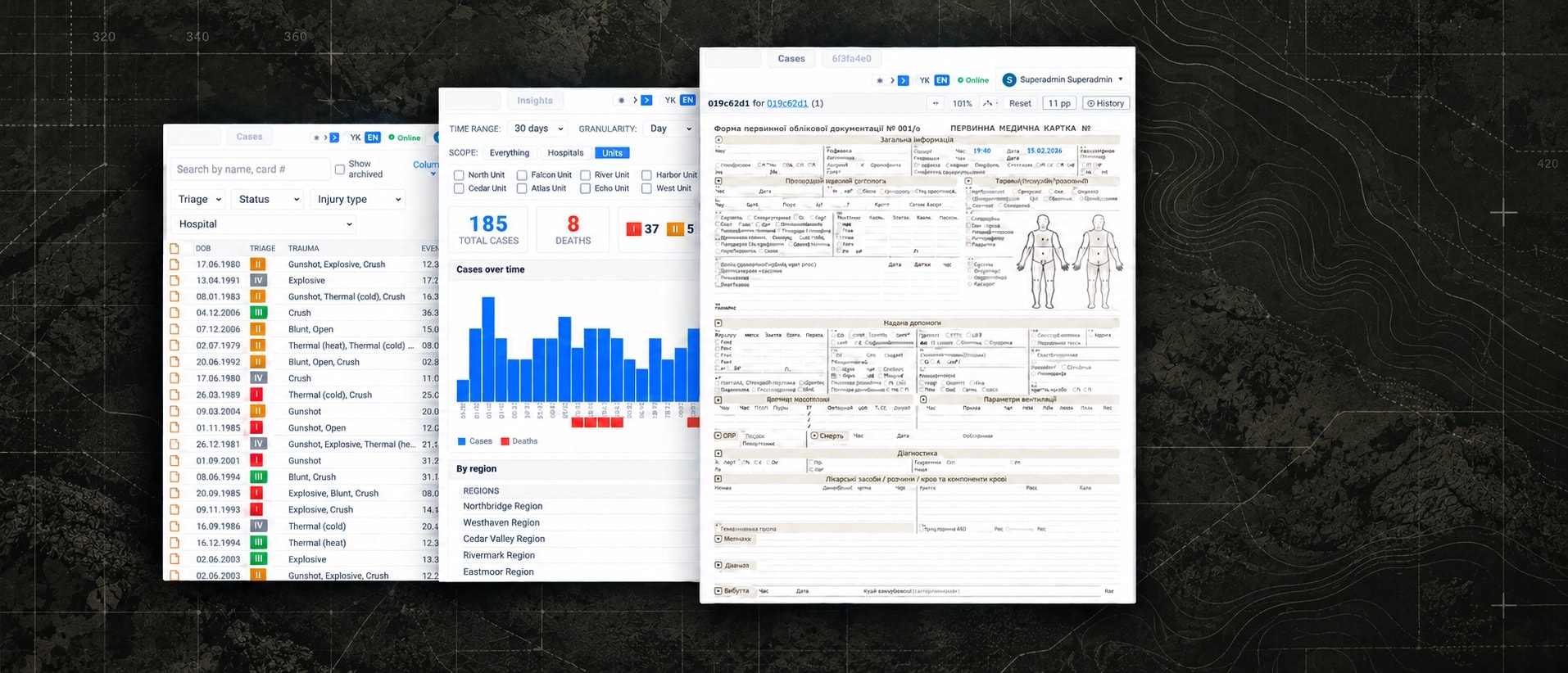
One casualty record from point of care to hospital
01
Offline-first capture
Tablet workflows remain useful without a connection and reconcile when connectivity returns.
02
Flexible interface
A familiar interface, aligned to existing systems and documentation standards, makes records fast to complete.
03
Continuity of care
Treatment, risk, destination and handover context stay with the casualty journey.
04
Assured provenance
Source, time, access and change history remain traceable across the record.
For medical planners and coordination teams
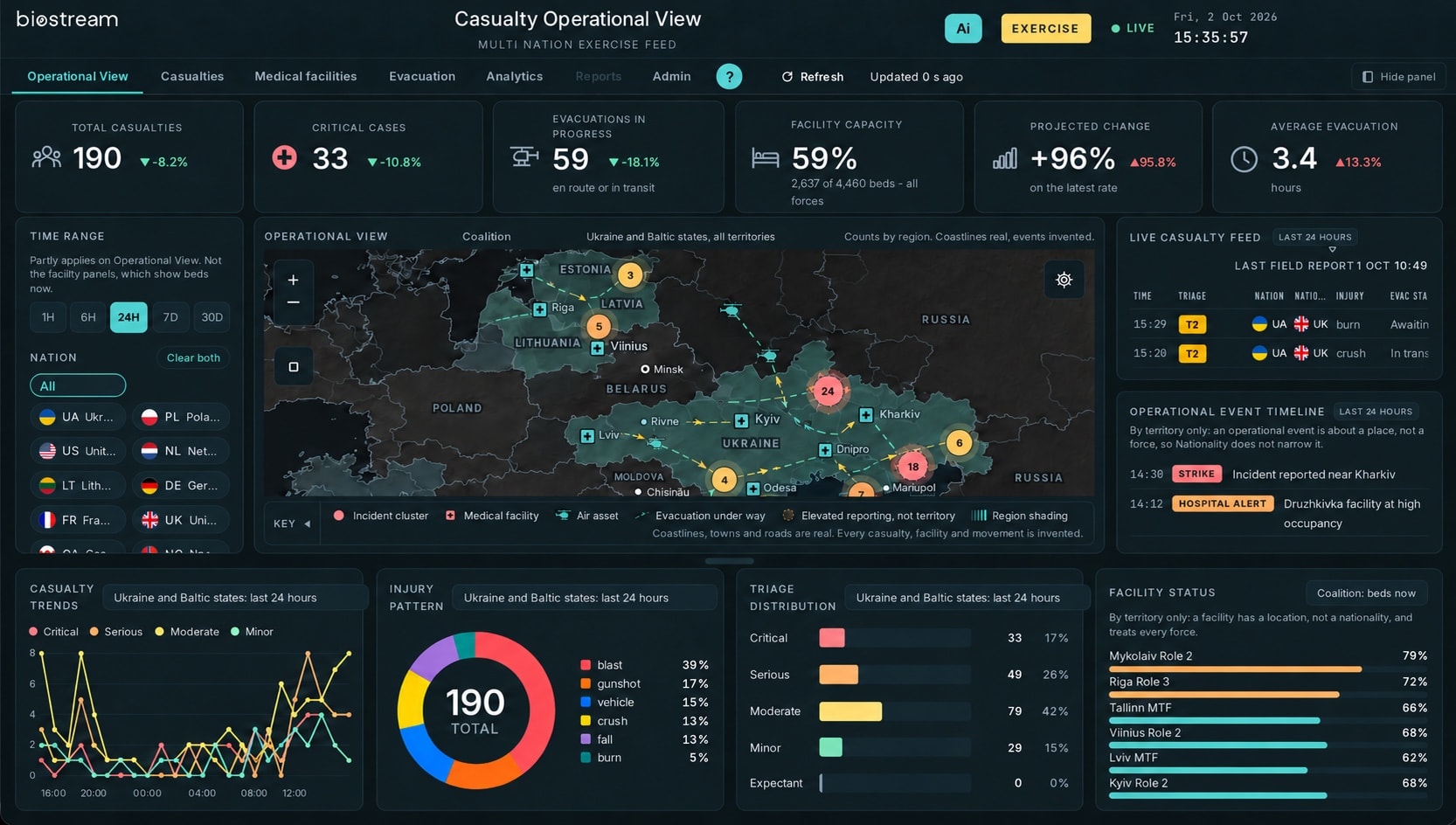
Real-time, evidence-led decision support at the speed that matters
01
Live casualty picture
Casualties, interventions, routes, capacity, blood and beds in one operational view.
02
Decision-speed analytics
Ask questions in plain language and see source-backed trends, forecasts and alerts.
03
System-neutral integration
Ingest approved records, documents and feeds from existing systems.
04
Human decision authority
The platform prioritises attention and presents options. People remain in control of decisions.

For researchers, analysts and data owners
Governed collaboration without surrendering dataset custody
01
Source-agnostic integration
Use approved structured feeds, files, documents, sensor and event data.
02
Collaboration with retained custody
Data owners retain ownership and control while secure inter-organisational collaboration is facilitated.
03
Contemporary analytical model
The LLM has been trained on contemporary casualty data to support clinically relevant questions.
04
Governed, auditable analysis
Question-level access, provenance, limitations, review status and output controls stay visible.
Tag: Wearable continuous monitoring and triage
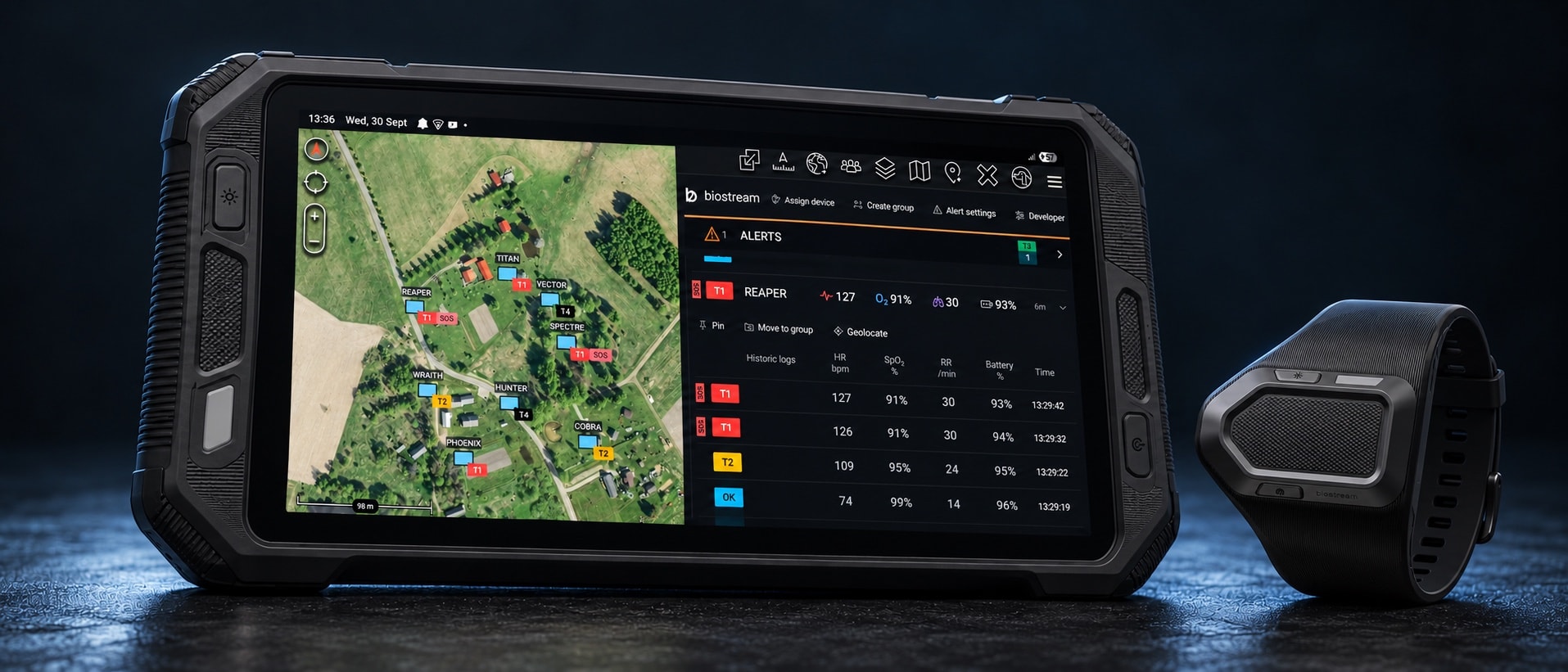
Individualised wearable triage, integrated or standalone
01
Continuous context
Physiological, movement, location and authorised medical identifiers enrich prioritisation.
02
Multi-factor prioritisation
Individualised algorithms fuse multiple signals, trends and casualty context rather than one blunt number.
03
Contemporary casualty learning
TAG triage algorithms have been trained on contemporary casualty data. Dataset details remain protected.
04
Connects by choice
TAG feeds Nightjar's live picture or integrates directly with approved systems.
Built to preserve control and sovereignty
Operational and research environments remain separated. Collaboration is controlled by role, purpose, authority and release conditions rather than by pooling ownership.
System-neutral integration
Complement existing systems and data authorities rather than forcing wholesale replacement.
Controlled collaboration
Share questions, approved data and governed outputs while each organisation keeps custody.
Security by design
Compartmented access, encryption, audit and explicit release controls protect sensitive data.
Evidence over assertion
Expose provenance, data gaps, limitations and review status wherever insights inform a decision.
Start with the capability you need
See how Nightjar fits your operating environment
Begin with digital records, a shared medical picture, governed research or connected monitoring. Every deployment uses the same underlying platform, allowing capabilities to expand without creating new data silos.